
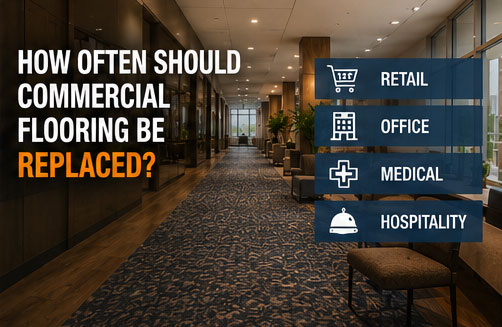
One of the most common questions Phoenix business owners and facility managers ask us is: “How do I know when it’s actually time to replace our flooring?” It’s a legitimate question — replacing commercial flooring too early wastes capital, but waiting too long leads to safety issues, brand damage, and ultimately more expensive remediation.
The answer depends on several variables: the type of flooring material installed, the volume and type of traffic the floor receives, the maintenance program that has been in place, and the industry standards for your specific business type. Below, we break it down by industry so you know exactly where your business stands.
Alliance Flooring Services serves businesses across the Phoenix metro area. If you’re unsure whether it’s time for a replacement, our team offers professional assessments.
Signs It’s Time to Replace Commercial Flooring — Regardless of Industry
Before getting into industry-specific timelines, there are universal warning signs that signal replacement is needed:
- Visible safety hazards – lifted tile edges, gaps in planks, torn carpet, or any surface irregularity that creates a trip hazard requires immediate attention regardless of age
- Permanent staining or discoloration – stains that cannot be removed through professional cleaning indicate the wear layer or fiber has been compromised
- Odor retention – flooring that retains odors after cleaning — particularly carpet in pet-friendly environments or kitchens — should be replaced
- Structural failure – hollow tiles, lifting planks, delaminating layers, cracked grout, or bubbling indicate that the flooring system has failed and is no longer performing as intended
- Outdated appearance damaging your brand – if your flooring is making your business look dated or unprofessional, that’s a legitimate business reason to replace
Retail Flooring: Replacement Every 7–15 Years
Retail environments subject flooring to extreme abuse — high-heeled shoes, shopping carts, display fixtures, constant foot traffic from parking lot debris, and regular wet cleaning. The replacement timeline varies significantly by material:
- Commercial LVP in retail – 10–15 years with proper maintenance and a 20-mil+ wear layer; entry areas near exterior doors may need earlier replacement due to concentrated abrasion
- Polished concrete in retail – can last the lifetime of the building with periodic resealing; no scheduled replacement necessary
- Porcelain tile in retail – 15–25+ years; grout lines may require regrout or replacement before tiles themselves wear out
- Carpet in retail – 5–7 years maximum in most retail environments; sooner in high-traffic entryways
Phoenix retail businesses should factor in the additional abrasion from desert dust and sand when planning replacement cycles — these abrasive particles accelerate wear layer breakdown compared to retail environments in other climates.
Estimate your retail LVP replacement project cost with our free online calculator.
Office Flooring: Replacement Every 10–20 Years
Office environments are generally less abrasive than retail, but they have their own challenges — rolling office chairs, frequent furniture rearrangement, and in Phoenix, constant dry air conditions that can affect certain flooring materials.
- Commercial carpet tile in offices – 10–15 years for the overall installation, with individual high-traffic tiles replaced every 3–5 years; rotation of tile positions extends the overall system life significantly
- Commercial LVP in offices – 15–20 years with standard commercial-grade wear layers; rolling chair mats should be used to protect the wear layer under heavy-use workstations
- Polished concrete in office corridors – no replacement required; reseal every 3–5 years
Open office plans with dense workstation configurations create localized wear patterns that should be assessed annually. Strategic tile rotation in carpet tile installations is one of the most cost-effective ways to extend office flooring life.
Medical Facility Flooring: Replacement Every 10–15 Years
Medical and dental offices in Phoenix face a unique combination of demands: infection control requirements, heavy rolling equipment, chemical exposure from cleaning agents, and regulatory compliance. These factors compress replacement timelines compared to other commercial environments.
- Sheet vinyl in medical environments – 10–15 years; seams and edges should be inspected annually for lifting that could harbor bacteria
- Luxury vinyl plank in medical offices – 10–15 years depending on cleaning chemical compatibility; ensure the selected product is rated for the disinfectants your cleaning protocol uses
- Porcelain tile in medical environments – 20+ years; grout selection is critical for infection control compliance
- Carpet in medical spaces – generally not recommended in clinical areas; limited to private offices and waiting rooms only, with a 7–10 year replacement cycle
Medical offices undergoing renovation should consult with their flooring contractor about products specifically tested for compatibility with healthcare-grade disinfectants. Alliance Flooring Services carries products from manufacturers with healthcare-specific product lines, including Armstrong Flooring and Metroflor USA.
Hospitality Flooring: Replacement Every 7–12 Years
Hotels, restaurants, and entertainment venues in Phoenix subject flooring to intense traffic concentrated in specific areas — lobbies, corridors, and dining rooms. The visual standards expected in hospitality environments also mean that replacement is sometimes driven by appearance before material failure occurs.
- Restaurant dining areas (LVP or tile) – 10–15 years with proper maintenance; entryways and host stand areas may need replacement sooner
- Hotel corridors (carpet) – 7–10 years; hotel corridors experience heavy rolling luggage traffic that accelerates carpet wear
- Hotel lobby areas (tile or LVP) – 15+ years; lobby flooring should be specified at the highest durability level given the cost of disruption to replace
- Restaurant kitchens (quarry tile or rubber) – 15–20 years; kitchen flooring fails more often from grout and drain details than from the tile itself
Hospitality replacement projects are best scheduled during low-occupancy periods. For Phoenix hotels and restaurants, early January through early February typically offers the best window for major flooring renovations before spring tourism peaks.
Plan Your Commercial Flooring Replacement Before It Becomes Urgent
The most cost-effective commercial flooring replacements are planned — not reactive. Businesses that budget for flooring replacement on a predictable schedule avoid the premium costs and operational disruption of emergency replacements after failure.
If your flooring is approaching the end of its expected service life, or if you’re seeing any of the warning signs described above, now is the right time to start planning. Get a free replacement quote from Alliance Flooring Services and let us help you plan a seamless transition to new flooring that works for your schedule and budget.
Read our Google reviews from Phoenix businesses across retail, medical, office, and hospitality sectors who have trusted Alliance Flooring Services with their commercial flooring replacement projects.
You can also estimate carpet replacement costs or explore polished concrete as your next long-term flooring solution using our free project calculators.