Workplace safety starts from the ground up. Flooring affects slips, trips, falls, fatigue, visibility, hygiene, equipment movement, and the way employees move through a space. Whether the building is an office, warehouse, restaurant, school, hotel, clinic, or manufacturing facility, the floor is part of the safety system.
Alliance Flooring Services helps Arizona businesses choose commercial flooring that supports durability, appearance, maintenance, and safer day-to-day operations.
Slip resistance and real-world conditions
Slip resistance is one of the most obvious flooring safety concerns, but it should be evaluated in context. A flooring product may perform differently when dry, dusty, wet, greasy, or cleaned with the wrong product. Restaurants, restrooms, entries, kitchens, healthcare spaces, and industrial areas all require special attention.
A safer flooring plan looks at surface texture, cleaning products, drainage, entry matting, footwear policies, and maintenance routines together.
Trips often start at transitions
Trip hazards frequently appear where one material meets another. Carpet to LVT, tile to concrete, old flooring to new flooring, and room-to-room transitions should be smooth, secure, and appropriate for the traffic moving across them.
Loose transition strips, lifted corners, curled carpet edges, cracked tiles, and uneven patching should be repaired quickly. Small issues can become serious when carts, visitors, employees, or mobility devices pass over them daily.
Moisture changes everything
Moisture can affect both safety and flooring performance. Wet entries, restrooms, kitchens, laundry rooms, production areas, and loading zones need materials that can handle the conditions. They may also need mats, drains, cove base, texture, or maintenance procedures to reduce risk.
In Phoenix, dust and grit tracked in from outside can combine with moisture and cleaning residue, creating additional wear or slipperiness. Entry planning matters.
Fatigue and comfort underfoot
Employees who stand for long periods may benefit from flooring systems or mats that improve comfort underfoot. Retail staff, restaurant teams, healthcare workers, manufacturing employees, and warehouse teams may all experience fatigue if surfaces are too hard or poorly planned.
Rubber flooring, resilient flooring, anti-fatigue mats, and other systems can be considered based on the work area. The goal is to support employees without creating maintenance or trip issues.
Visibility and wayfinding
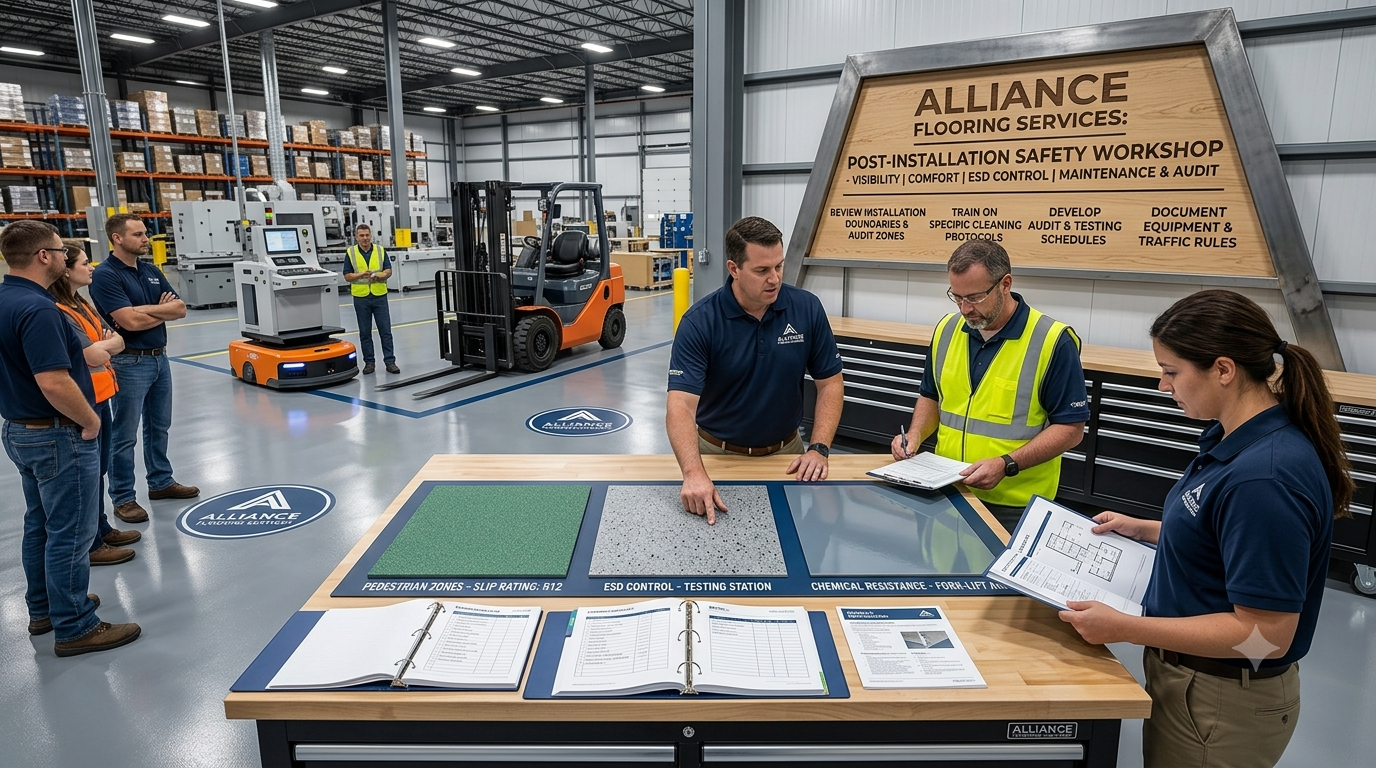
Flooring can help separate pedestrian paths, work zones, customer areas, and equipment routes. Color, pattern, and contrast may support wayfinding in offices, schools, healthcare facilities, warehouses, and manufacturing spaces.
When flooring is coordinated with signage and lighting, it can make movement through the building more intuitive. This is especially useful in large commercial spaces.
Maintenance is part of safety
Workplace walking surfaces should be kept clean, orderly, dry when feasible, and free of obvious hazards. Flooring selection should support that goal. A product that is hard to clean, traps moisture, hides damage, or requires unrealistic maintenance can work against the safety plan.
For more maintenance guidance, read our article on extending the life of commercial flooring.
Choose flooring around the risk profile
The best flooring for workplace safety depends on the risks in each space. Kitchens, entries, offices, warehouses, clinics, schools, and hospitality areas all need different flooring choices. A site-specific plan can reduce avoidable problems and improve long-term performance.
Review Phoenix commercial flooring installation options, visit our product showroom, or contact Alliance Flooring Services for help planning your project. You can also find us on Google Maps.
Frequently asked questions
Can flooring reduce workplace slips and falls?
Flooring can help reduce risk when selected for the environment and supported by cleaning, maintenance, signage, drainage, and housekeeping procedures.
What flooring is safest for wet areas?
Wet areas often need slip-conscious surfaces, proper drainage, durable transitions, and maintenance procedures. The best material depends on the specific use.
How often should commercial flooring be inspected?
High-use workplaces should inspect flooring regularly and whenever conditions change, especially around entrances, transitions, wet areas, and damaged sections.