
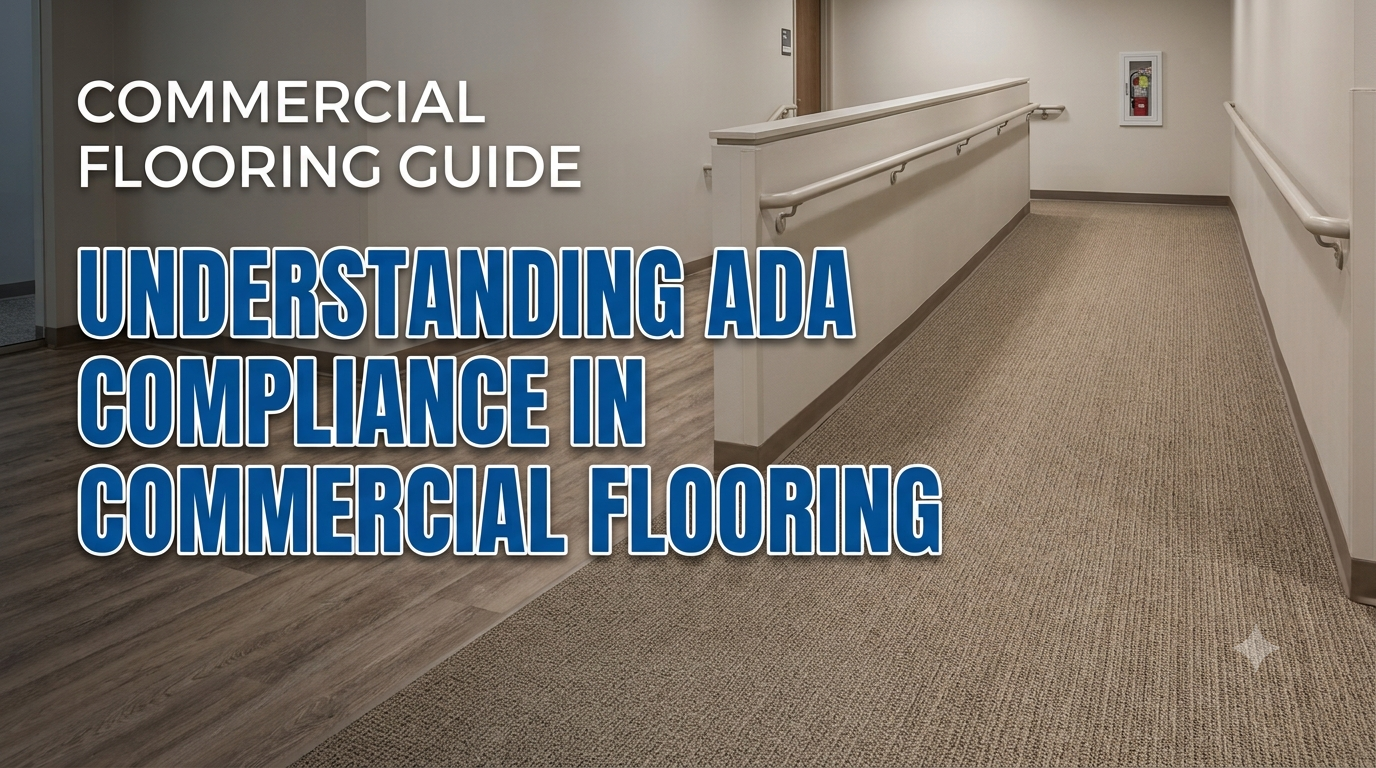
Commercial flooring plays an important role in accessibility. Floors affect how people move through entrances, corridors, work areas, restrooms, lobbies, classrooms, stores, offices, and public spaces. For building owners and project teams, flooring should be considered early so accessibility requirements, safety goals, design intent, and installation details can work together.
This article is a practical planning overview, not legal advice. ADA compliance should always be reviewed with qualified architects, code consultants, inspectors, and local authorities. Alliance Flooring Services supports project teams with product selection and installation through our commercial flooring services.
Accessible flooring starts with stable, firm surfaces
Accessible routes generally need floor and ground surfaces that are stable, firm, and slip resistant. In flooring terms, that means the surface should not shift, deform, or become unsafe under typical use. Hard surfaces such as tile, concrete, resilient flooring, LVT, and properly installed wood-like commercial materials may support accessibility when selected and installed correctly.
Loose materials, poorly secured flooring, soft cushioning, or damaged surfaces can create movement issues for wheelchairs, walkers, canes, and other mobility aids.
Slip resistance matters, especially in real conditions
Slip resistance should be evaluated based on how the space is actually used. A dry office corridor has different needs than a restaurant entry, restroom, medical suite, school hallway, or hotel lobby. Moisture, cleaning products, dust, food spills, and exterior debris can all change how a flooring surface performs.
The right product should be paired with the right maintenance plan. A floor that becomes slick because of residue, wax, dust, or improper cleaning can create problems even if the product was originally selected with safety in mind.
Transitions and changes in level
Transitions are one of the most important details in ADA-conscious flooring. Where carpet meets LVT, tile meets concrete, or a renovated area meets an existing floor, the transition should be smooth, durable, and appropriate for accessible travel. Abrupt edges, loose strips, or poorly planned height changes can create trip hazards and movement barriers.
Commercial flooring installation should coordinate transitions with doors, thresholds, ramps, base, and adjacent finishes before materials are ordered. Our Phoenix commercial flooring installation team can help project teams review these details during planning.
Carpet and carpet tile considerations
Carpet can be used in many commercial settings, but the product and installation method matter. Carpet and carpet tile should be securely attached, and the cushion or backing should be firm enough for the intended accessible route. Thick, soft, or loose carpet can make movement more difficult and can create problems at transitions.
Commercial carpet tile is often preferred in offices, corridors, and shared spaces because it offers acoustic benefits and selective replacement, but it should still be selected with accessibility, maintenance, and traffic in mind.
Openings, grates, and surface interruptions
Floor openings, grates, drains, expansion joints, and surface interruptions should be considered early. These details can affect accessible movement if they are too large, poorly oriented, recessed, raised, or located in a travel path.
In commercial renovations, existing conditions should be reviewed before installation. A new floor may reveal old transitions, uneven concrete, or door clearance issues that need correction.
Choose products by space type
ADA-conscious flooring is not one product. It is a planning approach. Restaurants, schools, offices, hotels, medical spaces, and warehouses all need different flooring strategies. The right material should support accessibility while still meeting traffic, cleaning, moisture, design, and maintenance needs.
Compare available materials in the Alliance Flooring Services product showroom, including carpet, resilient flooring, rubber, ceramic, LVT, and other commercial options.
Use an accessibility checklist before installation
- Review accessible routes and major circulation paths
- Confirm surface firmness, stability, and slip resistance needs
- Plan transitions between flooring types
- Check door clearances and thresholds
- Review carpet backing, pile, and attachment method
- Identify wet areas, ramps, restrooms, and entries
- Coordinate with the architect, contractor, and code professional
Get help with commercial flooring planning
Alliance Flooring Services helps Arizona businesses choose and install flooring that supports performance, appearance, and accessibility planning. View our commercial flooring gallery, read our flooring FAQs, or contact us to discuss your project. You can also view Alliance Flooring Services on Google Maps.
Frequently asked questions
Does commercial flooring affect ADA compliance?
Yes. Flooring can affect accessible routes, transitions, slip resistance, carpet performance, and the usability of commercial spaces.
Is carpet allowed in accessible commercial spaces?
Carpet may be used when selected and installed correctly. It should be securely attached and firm enough for the intended accessible route.
Who confirms ADA compliance for a flooring project?
ADA compliance should be confirmed by qualified design professionals, code consultants, inspectors, and local authorities. A flooring contractor can support the process with product and installation details.