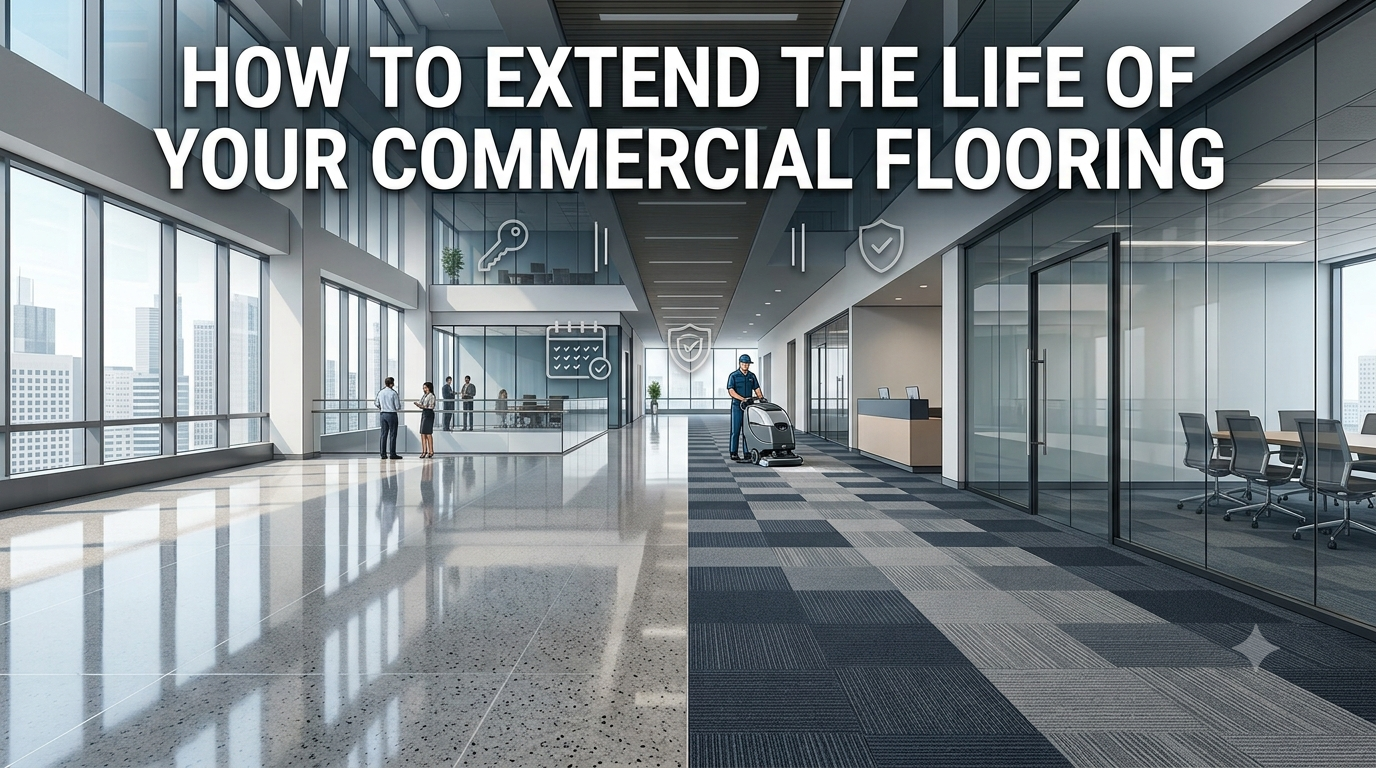
Commercial flooring is a long-term investment, but its lifespan depends on more than the product you choose. Installation quality, maintenance routines, traffic patterns, cleaning products, moisture control, and timely repairs all affect how long a floor looks good and performs well.
For Phoenix businesses, dust, grit, heavy use, and fast project timelines can all shorten flooring life if they are not planned for. Alliance Flooring Services installs flooring for offices, retail spaces, restaurants, apartments, hospitality properties, industrial buildings, and tenant improvements. Our commercial flooring services are designed to help clients choose durable materials and keep them performing after installation.
Choose the right material from the beginning
The easiest way to extend the life of commercial flooring is to start with a product that matches the environment. A flooring material that works in a private office may fail quickly in a restaurant, warehouse, medical suite, or apartment corridor. Traffic level, moisture exposure, rolling loads, cleaning routines, and expected appearance all need to be part of the decision.
If your space sees constant use, review our guide on choosing flooring for high-traffic commercial spaces before making a product decision.
Use entry systems to stop wear early
Most floor damage starts at the door. Dirt, sand, dust, and moisture get tracked inside and act like abrasive material under shoes, carts, and furniture. A proper entry mat system can reduce the amount of debris that reaches the main flooring surface.
For many commercial buildings, the entry should include both exterior and interior walk-off areas. These systems need regular cleaning too. A dirty entry mat stops working when it becomes saturated with debris.
Match cleaning methods to the flooring type
Cleaning routines should be based on the flooring manufacturer’s recommendations and the way the space is used. The wrong chemical, pad, machine, or frequency can dull finishes, damage seams, leave residue, or shorten the life of the surface.
Commercial carpet, LVT, rubber, tile, epoxy, and resilient flooring all need different care. For example, a product that handles daily damp mopping may not respond well to harsh solvents. A textured safety surface may need a different brush or scrubber than a smooth decorative floor.
Fix small problems before they spread
Minor flooring damage can become expensive when ignored. Loose transitions, lifted corners, cracked grout, open seams, moisture bubbles, and damaged tiles should be inspected quickly. Early repair helps protect the surrounding area and reduces the chance of trip hazards or water intrusion.
If you are unsure whether a floor needs repair or replacement, review the common questions on our flooring FAQ page or schedule a site assessment.
Protect floors from furniture and rolling loads
Furniture, carts, pallet jacks, office chairs, and equipment can create concentrated wear. Use proper glides, casters, walk-off mats, and protective pads where appropriate. In offices, chair mats or commercial flooring designed for rolling traffic can prevent premature wear around desks and workstations.
For warehouses, manufacturing spaces, and back-of-house areas, load expectations should be discussed before flooring is selected. A floor that is durable under foot traffic may not be appropriate for heavy rolling equipment.
Build a maintenance calendar
A simple maintenance calendar can extend flooring life dramatically. Include daily, weekly, monthly, quarterly, and annual tasks. The schedule should include vacuuming, sweeping, mopping, deep cleaning, mat cleaning, inspections, spot repairs, and finish maintenance if required.
Documentation also helps with warranty questions. Keep records of cleaning products, maintenance dates, inspections, and repairs. This can be useful if a manufacturer or installer needs to evaluate a claim.
Know when replacement is smarter than repair
Extending flooring life does not mean keeping a failing floor forever. If the floor creates safety concerns, hurts customer perception, traps moisture, or requires constant repairs, replacement may be the better investment. A planned replacement is usually easier to schedule than an emergency project.
Alliance Flooring Services can help compare repair, partial replacement, and full replacement options for commercial spaces. Visit our project gallery to see examples, or contact our team to plan your next flooring project. You can also find Alliance Flooring Services on Google Maps.
Frequently asked questions
How long should commercial flooring last?
Lifespan depends on the material, installation, traffic, maintenance, and environment. Some spaces need updates in a few years, while well-maintained commercial flooring can last much longer.
What causes commercial flooring to wear out early?
Poor product selection, improper cleaning, heavy grit at entrances, moisture, rolling loads, and delayed repairs are common causes of early wear.
Can maintenance affect flooring warranties?
Yes. Many warranties require proper installation and documented maintenance using approved cleaning methods and products.